

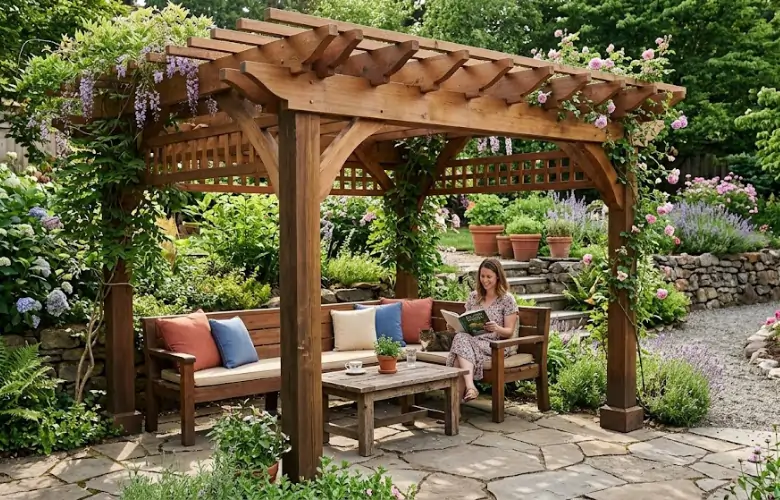
A wooden pergola is a functional and elegant garden structure that brings charm to backyards and gardens by providing a partially shaded place for leisure and activities. The construction process involves the use of sturdy wooden posts combined with an open-roof structure that enables light and air to flow freely within the area, resulting in a naturally relaxing environment. For many home owners, a wooden pergola makes the perfect garden feature due to its decorative, structural, and functional nature, turning bare outdoor spaces into functional areas for outdoor dining, gatherings, and leisure activities.
Understanding What a Wooden Pergola Is and Its Purpose
A wooden pergola is a timber based outdoor structure designed with vertical posts and an open roof system made of beams and rafters. The roof is not fully covered, which allows sunlight to filter through while maintaining partial shade underneath. This creates a balanced outdoor environment that feels both bright and comfortable at the same time. It is widely used to define outdoor areas without creating closed or enclosed spaces.
The main purpose of a wooden pergol is to extend living space outdoors in a natural and visually appealing way. It helps divide large garden areas into functional sections without using walls or barriers. For example, it can separate a dining area from a garden walkway or create a private relaxation corner within an open yard. This flexibility makes it highly useful in both small and large outdoor spaces.
In addition, it also enhances the overall visual structure of gardens. Instead of having empty or unused space, a pergola adds height, shape, and architectural interest. It creates a focal point that draws attention and improves the overall landscape design. Because of this combination of beauty and functionality, it is widely used in residential and commercial outdoor spaces.
Why Wooden Pergolas Are Popular in Modern Outdoor Design
The popularity of wooden pergola structures has grown rapidly due to changing lifestyle preferences. People are now spending more time at home and investing in outdoor comfort areas where they can relax and enjoy fresh air. A pergola provides the perfect solution by creating a semi outdoor living space that feels natural and comfortable.
One of the main reasons for its popularity is its natural appearance. Wood has a warm and organic look that blends easily with gardens, plants, and outdoor surroundings. Unlike metal or synthetic materials, wood creates a more peaceful and traditional atmosphere that enhances relaxation.
Another important reason is design flexibility. A pergola can be built in many styles depending on personal preference and available space. It can be simple and minimal or highly decorative and detailed. This adaptability allows homeowners to match it with different architectural styles.
It also increases the usability of outdoor areas. Instead of leaving a garden unused, a pergola transforms it into a functional space that can be used for dining, reading, social gatherings, or even work. This makes outdoor areas more practical and enjoyable throughout the year.
Key Benefits of Installing a Wooden Pergola
A wooden pergola offers a wide range of benefits that make it a valuable addition to any home. One of the most important benefits is the creation of natural shade. It reduces direct sunlight exposure while still allowing air and light to pass through, making outdoor areas more comfortable during hot weather.
Another major benefit is the improvement of property appearance. A well designed pergola enhances the visual appeal of gardens and patios, giving them a more organized and elegant look. It adds structure to open spaces and creates a sense of architectural balance.
It also supports outdoor lifestyle activities. Families can use it for dining areas, weekend gatherings, or simply relaxing in a peaceful environment. It provides a dedicated space for outdoor living without requiring major construction.
In addition, it allows integration with natural greenery. Climbing plants such as vines and flowers can grow over the structure, creating a natural green canopy. This not only improves shade but also adds beauty and freshness to the environment.
Different Wooden Pergola Design Styles for Outdoor Spaces
There are several design styles available when it comes to pergolas, each offering a unique look and purpose. A traditional style uses thick timber beams and a classic structure that fits well in natural garden settings. It creates a warm and rustic appearance that feels timeless.
A modern design focuses on clean lines and simple geometry. It is commonly used in urban homes where minimalism and elegance are preferred. This style often includes neutral colors and sleek finishes.
An attached pergola is connected directly to the house. It extends indoor living areas into outdoor spaces, making it ideal for patios and dining areas. It creates a smooth transition between inside and outside environments.
A freestanding pergola is placed separately in the garden. It can be positioned anywhere to create a focal point or relaxation zone. This style offers more flexibility in placement and design.
Materials Used in Wooden Pergola Construction
The strength and durability of a pergola depend heavily on the type of wood used in its construction. Choosing the right material is important for long term performance and maintenance.
Cedar wood is one of the most commonly used materials because it is naturally resistant to insects and decay. It also has a pleasant appearance and performs well in outdoor conditions.
Teak wood is another premium option known for its high durability and weather resistance. It is strong and long lasting, making it suitable for high quality outdoor structures.
Pine wood is a more affordable option and is often used for simple pergola designs. It is easy to work with but requires proper treatment to increase durability.
Installation Process of a Wooden Pergola
Installing a pergola requires careful planning and accurate execution to ensure stability and safety. The process begins with selecting a suitable location that has a flat surface and enough open space for the structure.
After selecting the location, measurements are taken and the layout is marked clearly. This step ensures proper alignment and balance of the structure.
Vertical posts are then installed securely into the ground, usually with concrete foundations for added strength. These posts form the main support system of the pergola.
Once the posts are fixed, horizontal beams are attached to create the main frame. After that, rafters are added on top to complete the open roof structure.
Maintenance Tips for Long Lasting Performance
Regular maintenance is important to keep a pergola in good condition for many years. Cleaning the structure regularly helps remove dust, leaves, and moisture that can affect the wood over time.
Applying protective coatings every few years helps preserve the wood and prevent damage caused by weather conditions. This also maintains its original appearance.
Routine inspections are also necessary to check for cracks, loose joints, or insect activity. Early detection helps prevent major structural issues.
Climbing plants should be managed properly to avoid excessive weight on the structure. Controlled growth ensures safety and balance.
Cost Factors of Wooden Pergola Installation
The cost of a wooden pergola depends on several important factors such as size, design complexity, and material type. Smaller and simpler structures are more affordable, while larger and custom designed pergolas require higher investment.
The type of wood used also affects the overall cost. Premium materials like teak and cedar are more expensive compared to pine. Additional features such as lighting, decorative elements, or partial roofing can also increase the total cost.Despite the investment, it provides long term value by improving outdoor living experience and increasing property appeal.
Frequently Asked Questions
1. What is a wooden pergola used for
A wooden pergola is mainly used to create a shaded outdoor space in gardens, patios, and backyards. It provides a comfortable area for relaxation, dining, or social gatherings while still allowing natural light and airflow. It also enhances outdoor beauty and makes the space more usable.
2. How long does a wooden pergola last
A well built structure can last between 10 to 25 years depending on the type of wood and maintenance. Hardwoods like teak and cedar last longer with proper care and sealing.
3. Is a wooden pergola weather resistant
Yes, it can be weather resistant if properly treated with protective coatings. Regular maintenance helps protect it from rain, sun damage, and insects.
4. What is the cost of a wooden pergola
The cost depends on size, design, and material type. Simple designs are more affordable while custom structures cost more due to materials and labor.
5. Can a wooden pergola increase home value
Yes, it can increase property value by improving outdoor living space. It adds style and functionality which makes the home more attractive to buyers.
Conclusion
Wooden pergola is definitely one of the most valuable outdoor constructions that provide an outstanding combination of style, comfort and practicality. By installing a pergola, you can easily turn any garden or patio into a beautiful place that can be used all year round for relaxation, entertainment and dining activities. Being made of wood, a pergola looks fantastic in any exterior and will make your backyard more appealing and eye-catching. If professionally designed, erected and properly maintained, such pergola will function and last for many years.
