

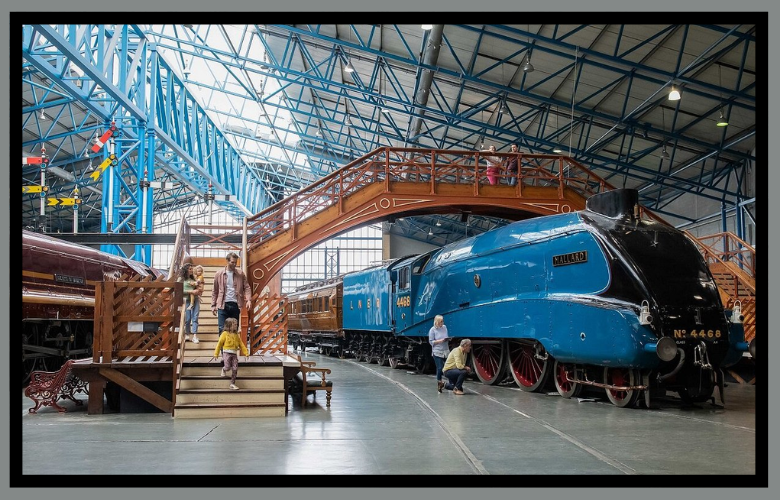
The York Train Museum, also called the National Railway Museum, is one of the most frequently visited tourist destinations in Northern England. It features record-breaking locomotives, royal railway coaches, fast trains, and many thousands of other exhibits related to the history of British railways. The entrance fee to the museum is free of charge, which makes it a perfect destination for families, students, railway fanatics, and those with tight budgets. The majority of exhibits in the York Train are located indoors, thus making it a good destination regardless of the weather conditions. This travel guide provides information on ticket prices, opening hours, Station Hall, train rides, facilities, photography, and the distance to the York railway station.
Why the National Railway Museum York Experience Is Special
The museum stands apart from smaller transport exhibitions because it displays complete locomotives and passenger vehicles rather than relying mainly on models, screens or photographs. Visitors can stand beside enormous driving wheels, look into historic engine cabs and compare trains built during different periods. Seeing the machinery at full scale helps people understand the weight, power and mechanical complexity involved in railway engineering. Boilers, pistons, connecting rods, wheels and braking systems become easier to understand when they can be examined from only a few metres away.
York is a suitable home for Britain’s national railway collection because the city has a long and important connection with rail transport. During the nineteenth and twentieth centuries, its stations, engineering works and railway businesses provided employment for thousands of people. Rail services connected York with London, Scotland, industrial centres and coastal towns, helping the city develop as a commercial and travel hub. The museum opened in 1975 in a former locomotive depot, so the historic buildings and tracks form an important part of the visitor experience.
Railway history is not only about engines and speed records. Trains changed where people could work, how companies transported products and how families travelled around the country. They supported postal services, newspaper distribution, seaside tourism and the movement of fresh food into growing cities. Stations became busy public places with waiting rooms, ticket offices, luggage services and refreshment areas. By presenting machinery alongside passenger stories and workplace objects, the museum explains how the railway helped shape modern British life.
Famous Locomotives, Great Hall and Station Hall Railway Museum
Great Hall contains many of the largest and most recognisable vehicles in the collection. Its high industrial roof, railway tracks and open layout create a dramatic setting for steam, diesel and electric trains. Visitors can compare body shapes, wheel arrangements, fuel systems and passenger designs from different periods. It is better to select several important exhibits and study them carefully rather than trying to read every information board. This focused approach makes the history easier to understand and prevents children from becoming tired too quickly.
Mallard is one of the museum’s most important locomotives. Its curved blue body was designed to reduce air resistance and improve performance at high speeds. In 1938, it reached 126 miles per hour and established a world speed record for a steam locomotive. The achievement showed that successful railway engineering depended on far more than building a powerful engine. Airflow, wheel design, exhaust systems, weight distribution and body shape all affected speed and stability. The Japanese Shinkansen offers a striking comparison by representing a later era of electric power, reliable high-speed services and passenger-focused design.
The Station Hall railway museum experience concentrates more closely on passenger journeys, freight services, royal travel and everyday station life. The restored hall occupies a former goods station and includes historic carriages, railway signs, luggage vehicles, advertising displays and objects used by railway employees. Royal carriages show how wealth, privacy and social position influenced travel, while ordinary passenger vehicles reveal how comfort differed between ticket classes. Station Hall and Great Hall currently use separate entrances, so visitors should follow the signs when moving between the two areas.
Railway Museum Tickets, Prices, Opening Times and Train Rides
People researching York railway museum ticket prices are often pleased to discover that general admission to the permanent collection is free. Visitors can reserve a free timed admission slot before travelling, while walk-up entry may also be available when capacity allows. Advance booking is particularly useful during weekends, school holidays, bank holidays and rainy days. It provides greater certainty and can reduce waiting at the entrance. The standard National Railway Museum tickets price is therefore £0, although optional experiences and special activities may require separate payment.
Important ticket and visitor information includes:
- General admission to the permanent collection is free.
- Normal museum hours are 10.00 am to 5.00 pm.
- Last admission is generally at 4.30 pm.
- Wonderlab requires a separate paid ticket.
- The miniature railway has an additional charge.
- The Road Train requires a separate ticket.
- Selected events may have individual prices.
- Advance reservation is recommended during busy periods.
- Some younger children enter paid activities free.
- Donations help support conservation and exhibitions.
The usual National Railway Museum opening times are 10.00 am until 5.00 pm, seven days a week, apart from the Christmas closure period. Some galleries, demonstrations and activities may close earlier than the main building, so visitors should not arrive shortly before final admission. Wonderlab is a paid interactive engineering space where children can explore motion, energy, forces and design through hands-on activities. Families should check its operating hours and book a suitable time before exploring the larger halls.
The York railway museum train ride may refer to the miniature railway or the Road Train. The miniature railway provides a short journey around part of the museum site and is particularly popular with young children. It usually operates on selected days and may be affected by weather, maintenance or staffing. The Road Train connects the museum area with central York near the Minster, making it useful for families and visitors combining several attractions. It should be treated as an enjoyable transport option rather than the only way to reach a timed train or appointment.
Distance From York Station, Parking, Facilities and Photography
Visitors commonly ask, how far is York railway museum from York train station? The attraction is physically close to the main railway station, but development work has changed some pedestrian routes. Most travellers should allow approximately 10 to 15 minutes for the walk, depending on their pace, luggage and chosen entrance. Visitors using wheelchairs or pushchairs should follow the signed step-free route, as some alternative paths include stairs. Current signs around the station and museum are generally more dependable than older maps that may show routes no longer available.
Drivers should check the latest parking arrangements before beginning their journey because central York can become congested during weekends and holiday periods. Museum parking may be available for a daily charge, but spaces can fill quickly. York Park and Ride services may provide a simpler option for visitors who prefer not to drive through busy central streets. The museum includes cafés, toilets, baby-changing areas, seating and accessible facilities. Visitors can also bring their own food, which helps families control the total cost of their day.
People searching for National Railway Museum York photos will find many visually impressive subjects. Mallard’s streamlined body, the large wheels of steam engines, historic nameplates and Great Hall’s industrial architecture can produce memorable images. Close-up photographs of controls, painted lettering, bolts and mechanical parts often look more distinctive than standard wide shots. Visitors should keep pathways clear, follow photography signs and avoid touching or climbing on the vehicles. Taking a few considered photographs leaves more time to observe the actual collection.
Family Benefits, Educational Value, Pros and Cons
The museum has strong educational value because its exhibits connect naturally with history, geography, science and design. Children can learn about heat, pressure, energy, friction and movement by studying real steam locomotives. Maps and route displays explain how cities and towns became connected, while passenger carriages reveal differences in wealth and social class. Parents can encourage learning by asking simple questions about wheel size, fuel, speed and train shape. These conversations help children think critically without turning the visit into a formal lesson.
Families benefit from the free admission and flexible layout. Parents can spend two hours seeing the major exhibits or remain for most of the day without feeling pressured to justify an expensive entry fee. Young children may enjoy the size, colours and shapes of the trains, while older children can explore engineering and speed records. Interactive experiences and train rides can be added according to age, interest and budget. Adults may appreciate the architecture, craftsmanship and stories of railway employees even when they are not dedicated train enthusiasts.
The main advantages are free general entry, famous locomotives, large indoor spaces and useful family facilities. The museum also works well for mixed-age groups because visitors can concentrate on different subjects. Possible disadvantages include crowds during school holidays, additional charges for optional experiences and the amount of walking required between galleries. The collection may feel overwhelming when visitors arrive without priorities. Choosing three or four major exhibits, arriving early and taking a proper break usually solves most of these problems.
Frequently Asked Questions
Is the York Train Museum free to enter?
Yes, general admission to the main galleries is free. Visitors may need to pay separately for Wonderlab, railway rides, special events and selected interactive activities.
Do visitors need to book tickets in advance?
Advance booking is recommended during weekends, bank holidays and school breaks. Walk-in admission may still be available, but entry can depend on the museum’s capacity.
What are the National Railway Museum opening times?
The museum normally opens daily from 10.00 am to 5.00 pm. Last admission is usually at 4.30 pm, although some activities may finish earlier.
How long should visitors spend at the museum?
Most visitors need between two and four hours to explore the main galleries. Families using train rides or interactive attractions may prefer to allow half a day.
How far is the museum from York railway station?
The attraction is normally around a 10 to 15-minute walk from York railway station. The journey time may vary because of current pedestrian routes and development work.
Conclusion
There are many good aspects about the York Train Museum that make it worth visiting. Not only does it have a good amount of information to give to its visitors on railways and engineering, but there are plenty of options that make it a valuable attraction. For instance, it has free admission fees for the main museum, but there are additional choices to choose from that cater to both the budget and interests of the visitor. Children, adults, and those who really like railways can get enough out of this museum with such items as Mallard, Station Hall, historic trains, and other interactive exhibits. The York Train is conveniently located near the railway station and city center of York.
