

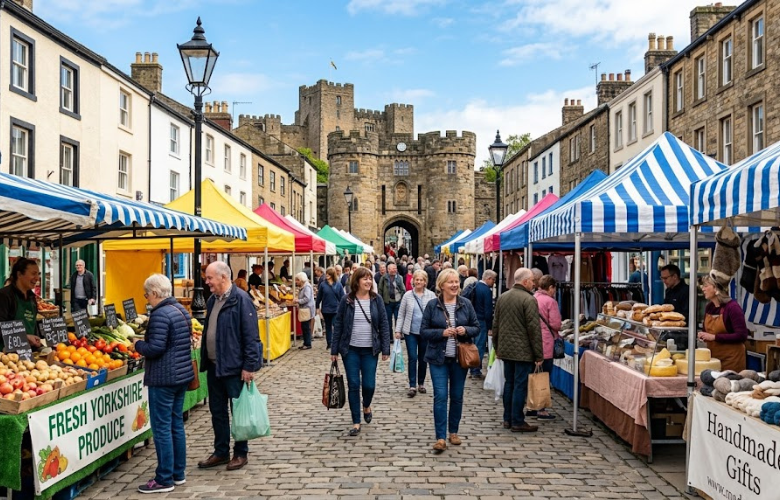
Skipton Market is one of the most historic and vibrant traditional markets in North Yorkshire, England. Located in the heart of Skipton town, it brings together centuries of trading heritage with a lively modern shopping experience. The market takes place along the famous High Street, where independent traders set up stalls offering fresh produce, clothing, crafts, and everyday essentials. It is a key attraction for both locals and tourists who want to experience authentic market-town culture. With its friendly atmosphere, rich history, and diverse range of goods, Skipton Maret continues to be a central part of the town’s identity and charm.
What is Skipton Market?
Skipton Market is a traditional open-air street market where independent traders set up stalls to sell goods directly to the public. It takes place in the town centre and transforms the High Street into a lively marketplace on trading days. The market is not a modern shopping complex but a historic trading space that has existed for hundreds of years under a royal charter.
It offers a wide range of products including fresh food, clothing, household goods, and handmade crafts. Over time, it has developed into both a shopping destination and a cultural symbol of the town’s identity. Visitors experience a more personal form of shopping where they can speak directly to stallholders and learn about the products they are buying. This direct interaction adds authenticity and trust to the shopping experience.
The market also reflects the evolution of small-town commerce in England. While modern retail has changed many shopping habits, this traditional market has remained relevant by preserving its original character while adapting to modern needs. It continues to serve both practical and cultural purposes within the community.
Historical Background and Market Heritage
The origins of Skipton Market go back to medieval times when the town was granted the right to hold regular markets through a royal charter. This legal foundation allowed Skipton to develop into an important trading centre in North Yorkshire. In earlier centuries, farmers, traders, and craftsmen from surrounding villages would travel to the town to sell goods and livestock.
This long tradition has shaped the identity of Skipton over hundreds of years. The market became a central point for economic activity, helping the town grow and prosper. Many of the trading customs established in those early days still influence the market today. The layout of the town, with its cobbled streets and historic buildings, reflects this long heritage.
Even in the present day, visitors can feel the historical atmosphere while walking through the market area. It offers a rare connection between past and present, where centuries-old traditions continue to exist alongside modern life. This continuity is one of the reasons the market remains so significant.
Weekly Schedule and Market Days
The market operates on a consistent weekly schedule, which helps maintain its importance in the local economy and community life. It is typically open four days a week, ensuring regular activity in the town centre. On these days, the High Street becomes filled with stalls, creating a busy and engaging environment for shoppers and visitors.
The market usually begins in the morning and continues into the afternoon, allowing enough time for browsing and shopping at a relaxed pace. Early hours are often quieter, giving visitors a more peaceful experience, while later hours become more energetic as footfall increases. The changing atmosphere throughout the day adds variety to each visit.
Seasonal differences also play a role in what visitors experience. Certain times of the year bring more fresh produce, while others focus on crafts or seasonal goods. This variety ensures that the market remains interesting and dynamic throughout the year.
Shopping Experience and Independent Traders
The shopping experience at Skipton Market is shaped by its strong focus on independent traders. Unlike large retail chains, each stall is usually run by a small business owner who has direct involvement in sourcing or producing their goods. This creates a personal and trustworthy shopping environment.
Visitors can find a wide range of items including fresh fruit and vegetables, artisan baked goods, handmade crafts, clothing, footwear, and household essentials. Each stall reflects the personality and expertise of its owner, which adds diversity and uniqueness to the market as a whole. The experience is not just about purchasing goods but also about interaction and conversation.
Many customers return regularly because they build relationships with traders over time. This sense of familiarity creates a community-driven atmosphere where shopping feels more meaningful and connected compared to large commercial centres.
Food, Fresh Produce, and Local Specialties
Food plays a central role in the appeal of Skipton Market, especially due to its connection with local agriculture in North Yorkshire. Many stalls focus on fresh, seasonal produce that is sourced from nearby farms. This ensures high quality and supports the regional food economy.
Visitors can find a variety of products including fruits, vegetables, meats, dairy products, and baked goods. In addition to everyday essentials, there are also specialty items such as artisan cheeses, handmade preserves, and traditional baked treats. These products often reflect local culinary traditions and flavours.
The availability of seasonal produce means the market changes throughout the year. This keeps the experience fresh for returning visitors and highlights the natural rhythm of farming and food production in the region. It also reinforces the importance of supporting local suppliers.
Atmosphere and Cultural Importance of Skipton Market
Skipton Market is widely recognized for its lively and welcoming atmosphere. It is a place where traders, locals, and visitors come together in a shared public space. The sound of conversation, movement of people, and energy of trading create a vibrant environment that is unique to traditional markets.
Beyond commerce, the market plays an important cultural role in the town. It helps maintain community connections and supports local identity. It also preserves traditional forms of trading that have existed in Britain for centuries, making it an important part of cultural heritage.
The market is often described as a space where history and modern life blend naturally. This combination gives it a distinctive character that continues to attract people from different backgrounds and regions.
Visitor Experience and Practical Advice
Visiting Skipton Market is generally straightforward, but a few practical considerations can improve the overall experience. Early visits are recommended for those who prefer a quieter environment and the best selection of fresh goods. As the day progresses, the market becomes busier and more social.
Comfortable walking shoes are advisable due to the cobbled streets and extended walking areas. It is also helpful to carry both cash and card options, as different traders may accept different payment methods. Weather conditions can also influence comfort, so planning accordingly is important.
Many visitors choose to combine their visit with nearby cafés, shops, and attractions. This turns a simple shopping trip into a full day experience, making the visit more enjoyable and relaxed.
Nearby Attractions and Town Highlights
Skipton offers a wide range of attractions beyond the market, making it a strong destination for tourism. One of the most notable landmarks is Skipton Castle, a well-preserved medieval structure that provides insight into the town’s long history. It is located close to the market and can be easily visited during the same trip.
The Leeds and Liverpool Canal is another popular attraction, offering scenic walking routes and peaceful waterside views. The town centre itself is filled with independent shops, cafés, and traditional pubs that enhance the overall visitor experience. These features contribute to the town’s charm and character.
Many visitors also use Skipton as a base for exploring the Yorkshire Dales, which are known for their natural beauty, hiking trails, and rural landscapes. This makes the area appealing for both cultural and outdoor tourism.
Transport and Accessibility
Skipton is well connected by road and rail, making it accessible from major cities across the region. The town centre is compact, which means most attractions, including the market, are within walking distance. This makes it convenient for day trips and short visits.
Public transport options are reliable and widely used by visitors who prefer not to drive. Parking facilities are available in several parts of the town, although they can become busy during peak market times. Planning ahead is recommended, especially on weekends.
Once in Skipton, navigation is simple, and visitors can easily move between the market and nearby attractions without additional transport. This accessibility adds to the overall convenience and popularity of the destination.
(FAQs)
1. What is Skipton Market known for?
Skipton Market is famous for its deep historical roots, traditional street trading, and vibrant mix of independent stalls. It is especially well known for fresh local produce, handmade goods, and a lively market-town atmosphere in North Yorkshire. The market continues to be a key part of the town’s identity and daily life.
2. What days is Skipton Market open?
Skipton Market runs four days a week on Monday, Wednesday, Friday, and Saturday. These regular market days bring the town centre to life with traders setting up a wide range of stalls. Each day offers a slightly different shopping experience depending on season and traders.
3. Is Skipton Market good for tourists?
Yes, it is a major attraction for tourists visiting North Yorkshire. It offers a traditional British market experience combined with nearby historic and scenic attractions such as Skipton Castle and the Leeds and Liverpool Canal. Many visitors combine sightseeing with shopping for a full day out.
4. What can you buy at Skipton Market?
Visitors can find everything from fresh fruits and vegetables to artisan cheeses, baked goods, clothing, homeware, and handcrafted items. The variety changes depending on the day and season, making each visit slightly different. Independent traders bring a personal touch to every stall.
5. Is Skipton Market expensive?
No, it is generally considered affordable and good value for money. Prices are often competitive compared to supermarkets, especially for fresh produce and local goods. Many visitors appreciate the combination of quality and reasonable pricing.
Conclusion
In conclusion, Skipton Market stands as one of the most authentic and historically rich traditional markets in England. It perfectly combines centuries of trading heritage with a modern-day shopping experience that appeals to both locals and visitors. The market is not only a place to buy fresh produce, clothing, and handmade goods but also a cultural landmark that reflects the spirit of Skipton town. Its friendly traders, lively atmosphere, and central location make it a must-visit destination in North Yorkshire. Whether for shopping or sightseeing, Skipton Market offers a memorable and enjoyable experience for everyone who visits.
