

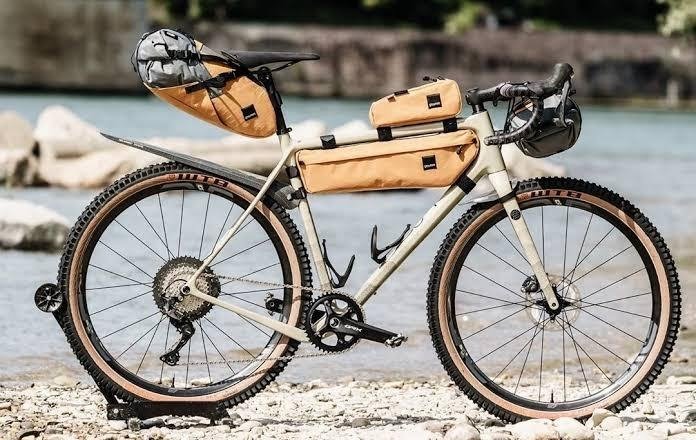
Are you still travelling without a bicycle bag? Bicycle bags are specifically designed as a solution for taking luggage on travel with you. The solution can attach directly to your bicycle, which allows cyclists to carry essential items like tools, clothing, laptops, groceries or travel gear without relying on a traditional backpack.
Like other revolutions, the quality of bicycle bags has also evolved from simple leather pouches mouted under the saddle bag to highly specialized products.
The newly evolved bags play a vital role in modern cycling by balancing convenience, safety and performance, ensuring that whether you are riding to work, embarking on a weekend outing, traveling for an adventure, or transporting your bicycle on a plane, you have the right capacity and mounting system for the job.
What is a Bicycle Bag?
A bicycle bag originated in the late 19th and early 20th century. It was during this time period when cyclists in Europe and North America began using small saddle bags made of leather to hold tire repair kits and spare parts, which were often made by early bicycle manufacturers or local craftsmen.
With the passage of time, as cycling grew into commuting, touring, mountain biking, and racing, bicycle bags expanded into multiple forms. They have changed significantly with the advancement of materials from leather to waterproof and carbon-reinforced fabrics and mounting systems in the form of straps, quick-release racks and Velcro.
This has allowed these bags to adapt to modern needs for durability, weather resistance and aerodynamics. Bicycle bags serve a diverse audience, which includes commuters, long-distance bikepackers, recreational cyclists, and professional riders, with a market driven by both lifestyle and performance demands.
The motive for evolving bags according to the requirements is not only to provide storage but also to improve comfort, balance and safety by distributing weight properly across the bicycle. Therefore, a bicycle bag has become a benefit in both scenarios as a functional necessity and a cycling lifestyle product.
Through the upgrade, bicycle bags offer the value of versatility in terms of travelling convenience and everyday practicality, which is the reason for making it an essential part of modern cycling equipment.
What Requirements Should a Good Bicycle Bag Meet?
In the matter of selecting a bag, the important thing is the quality of the product, which promotes the enhancement of the product. Therefore, expert cyclists prefer a quality bag because a good bag has a number of important features, one of which is probably the water resistance of the bag.
The quality of water resistance is important because if you want to be able to ride through the rain, then a waterproof bicycle bag is imperative. When the bicycle bag is water-repellent, then it will be able to handle most brief or light showers. However, you have to make sure that you buy a matching rain cover.
Another important and preferred feature of a bicycle bag is that your selected bag should have extra visibility in traffic. It is also a high-quality bicycle bag because it is equipped with reflective elements. Some models are even available in a striking neon yellow colour.
While selecting a bicycle bag, keep in mind that your selected bag should not only withstand the elements. It should also be able to take a bit of beating, and when buying a bicycle bag, consider whether the bicycle bag has been developed with sustainable materials. You will find this information in the technical specifications of the bag.
Why Do People Put Bags Over Their Bicycle Seats?
Most people who have a passion for cycling and the people who are professional cyclists use the method of putting bags over their bicycle seats because saddle bags provide convenient storage for essentials without affecting balance or requiring a backpack.
These kinds of bags are positioned directly under the saddle. For their attachment, they use straps, Velcro, or a clip system to stay secure and in shape according to the design of the bicycle, for the sake of making them ideal for both road cycling and mountain biking.
However, this setup adds value by keeping repair kits and small items always accessible, reducing rider strain, and ensuring a clean, efficient solution for everyday rides or long-distance tours.
Conclusion
The selection of bags is rarely a problem. Therefore, many cyclists often face challenges when choosing the right bag. It is a crucial task, from deciding between a compact saddle bag or large Bicycle Pannier Bags to understanding the materials, waterproofing, and compatibility with racks or frames.
Therefore, bicycle bags are more than accessories because they are essential tools for storage, commuting, and travel, offering the value of versatility, comfort and organization for every type of rider.
