

If you’ve just brought home an oodle puppy, the first year will fly by. And between feeding schedules, puppy training, vet visits, and socialisation, there’s a lot to stay on top of. We know the feeling because we’ve raised our own oodle pups from day one, and we’ve seen how the right care early on sets your dog up well long term.
So in this article, we’ll walk you through everything from food and raw bones to fear periods and emotional maturity, so you’ll know what to expect at each stage.
Preparing Your Puppy’s Home for the First 12 Weeks
A little prep before your pup arrives will save you a lot of stress in those first 12 weeks. Your new puppy will chew and get into everything, so the goal is a safe space where they can settle in calmly.
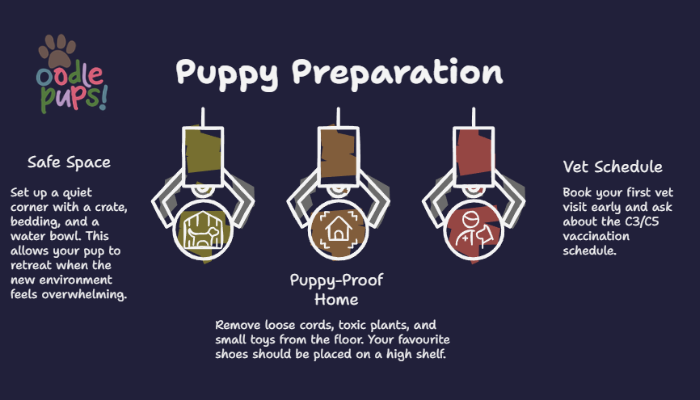
Here are a few things to sort before pickup day.
- Safe Space First: Set up a quiet corner with a crate, bedding, and a water bowl so your pup can retreat when the new environment feels too much.
- Puppy-Proof the Home: Remove loose cords, toxic plants, and small toys from the floor (and yes, your favourite shoes belong on a high shelf).
- Vet Schedule: Book your first vet visit early and ask about the C3/C5 vaccination schedule so your pup stays protected.
A good puppy home doesn’t need to be perfect, just safe and ready for a few surprises.
Choosing the Right Puppy Food and Introducing Raw Bones
Did you know that what your puppy eats in the first 12 months can affect their coat, joints, and energy for years? That sounds like a lot of pressure, but frankly, it doesn’t need to be complicated. The right puppy food and a few safe chewing options will cover most of what your pup needs during this life stage.
Let’s break it down.
Picking a Puppy Food That Supports Healthy Growth
Start with the same food your breeder used and transition slowly over 7 to 10 days. If you switch too fast, your puppy’s stomach will let you know. From there, choose a premium formula that supports joints, brain, and coat development. You can feed dry kibble, wet food, or a mix of both, depending on your pup’s age.
Some pet owners also add raw meat to their puppy’s diet, and that works well as long as the portions suit your breed.
When and How to Introduce Raw Bones Safely
Raw bones are great for your puppy’s teeth, and they give your pup something productive to chew on.
Pip and Rosie both started on soft raw bones around 12 weeks, and it became part of their routine quickly. Go for raw chicken necks or lamb ribs since these are soft enough for developing teeth. Always supervise chewing and toss the bone once it gets small enough to swallow.
Now, let’s look at how to build good habits through training.
Puppy Training Basics That Actually Stick
Short, reward-based training sessions are the best way to teach your oodle puppy good habits early. Begin with sit, recall, and loose-leash walking, and keep each session to around 5 to 10 minutes. Puppies have short attention spans, so if you push too long, your pup will lose focus and treat the whole thing like playtime.
There’s no shortcut here, because consistency is what makes training stick.
If you reward good behaviour straight away, your puppy will connect the action with the treat (skip that window and you’ll spend weeks undoing bad habits). You can use small, soft treats and mix in toys or play as a reward, too. Fun keeps your pup engaged and even makes the process feel less like a chore for both of you.
Reward-based training also builds confidence, which helps when your dogs face new situations down the track. And the habits your puppy picks up now will carry right through to adult life.
From there, we need to move on to socialising them.
Socialising Your New Puppy With Other Animals and People
Early socialisation builds calm, confident dogs. The window between 8 and 16 weeks is when your puppy soaks up the most from positive experiences with other dogs, other animals, and new people. If you miss that window, building confidence later will take much longer.
For us, Rosie was a cautious pup, so we introduced her to other pets and different environments slowly. And that early effort paid off big time.
Here’s how to read your puppy during socialisation.
| Positive Signs | Stress Signals |
| Loose, wiggly body | Tucked tail or stiff posture |
| Play bows and soft eyes | Whale eyes or lip licking |
| Approaching with curiosity | Hiding, freezing, or trying to bolt |
If your puppy shows stress signals, calmly remove them from the situation. Short, positive sessions with other dogs and humans in controlled settings work far better than one long, overwhelming outing.
Understanding the Fear Period and Emotional Maturity
Ever noticed your usually bold puppy suddenly acting scared of something they were fine with last week? That’s likely a fear period. Most puppies go through two stages, one around 8 to 11 weeks and another between 6 and 14 months.
You’d be surprised how many owners miss this. During a fear period, even one bad experience can create lasting anxiety in your dog (most owners mistake this stage for disobedience). So if your pup suddenly refuses a walk or barks at something familiar, don’t force it. Stay calm and give them space.
Emotional maturity in oodle breeds usually arrives between 18 months and 2 years. Different breeds reach it at different ages, and giant breeds tend to take longer than small breeds. But your young puppy is still figuring out the world, and patience during this stage pays off once they settle into a calmer adult dog.
Setting Up Your Puppy’s Life for a Great First Year
Look, the first year is a lot. But it’s also the best bit. Between the feeding, training, vet visits, and socialisation, you’re building the foundation for a healthy, well-adjusted dog. And every small effort you put in now will show up in your puppy’s life for years to come.
If something feels off along the way, lean on your breeder or vet for advice. You don’t need to figure it all out alone. The fact that you’re reading this article says a lot about the kind of pet owner you are.
Your pup’s first year is an important time, and with the right support, it can be one of the most fun and rewarding stages of life with your new family member.
